
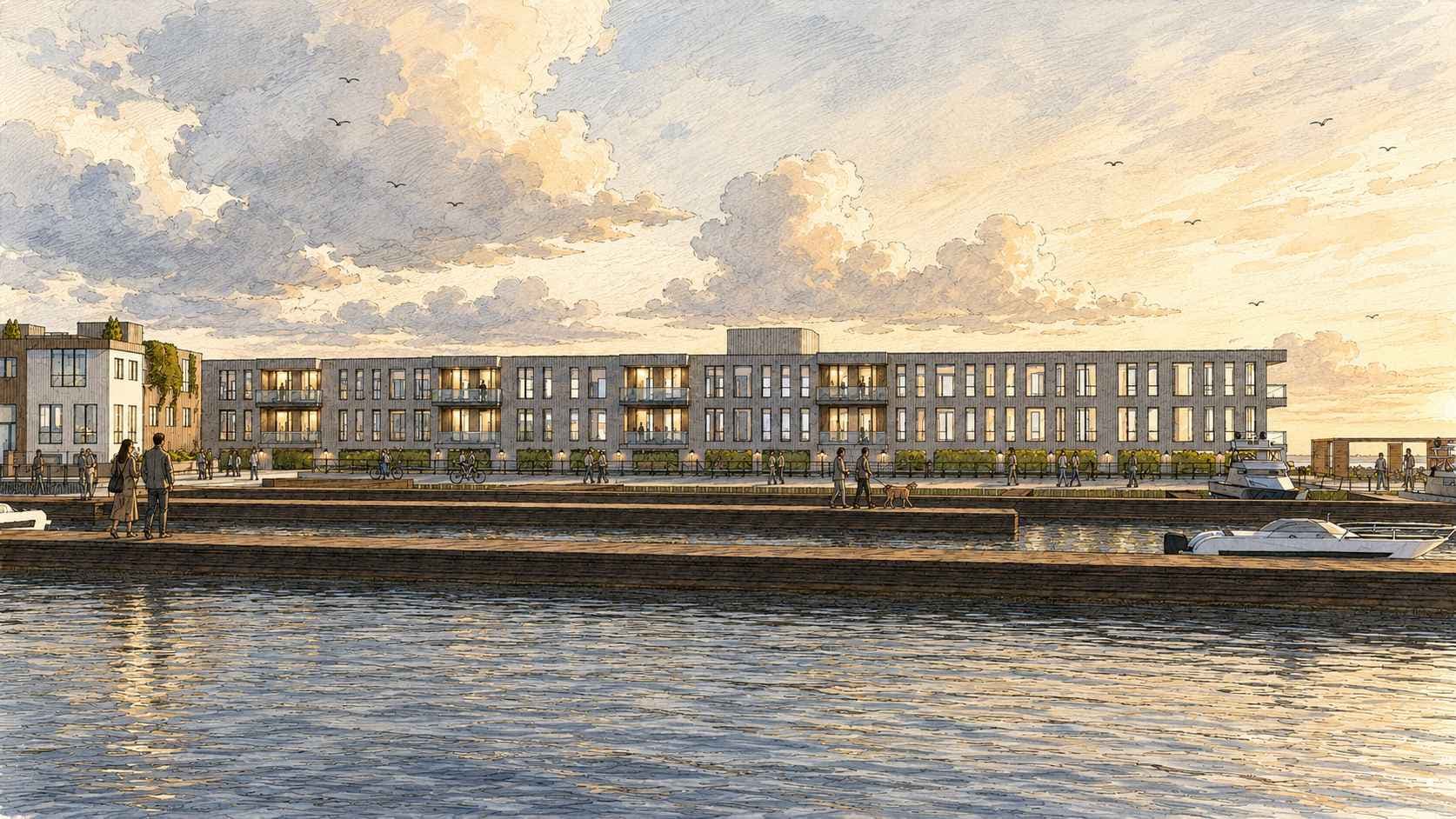
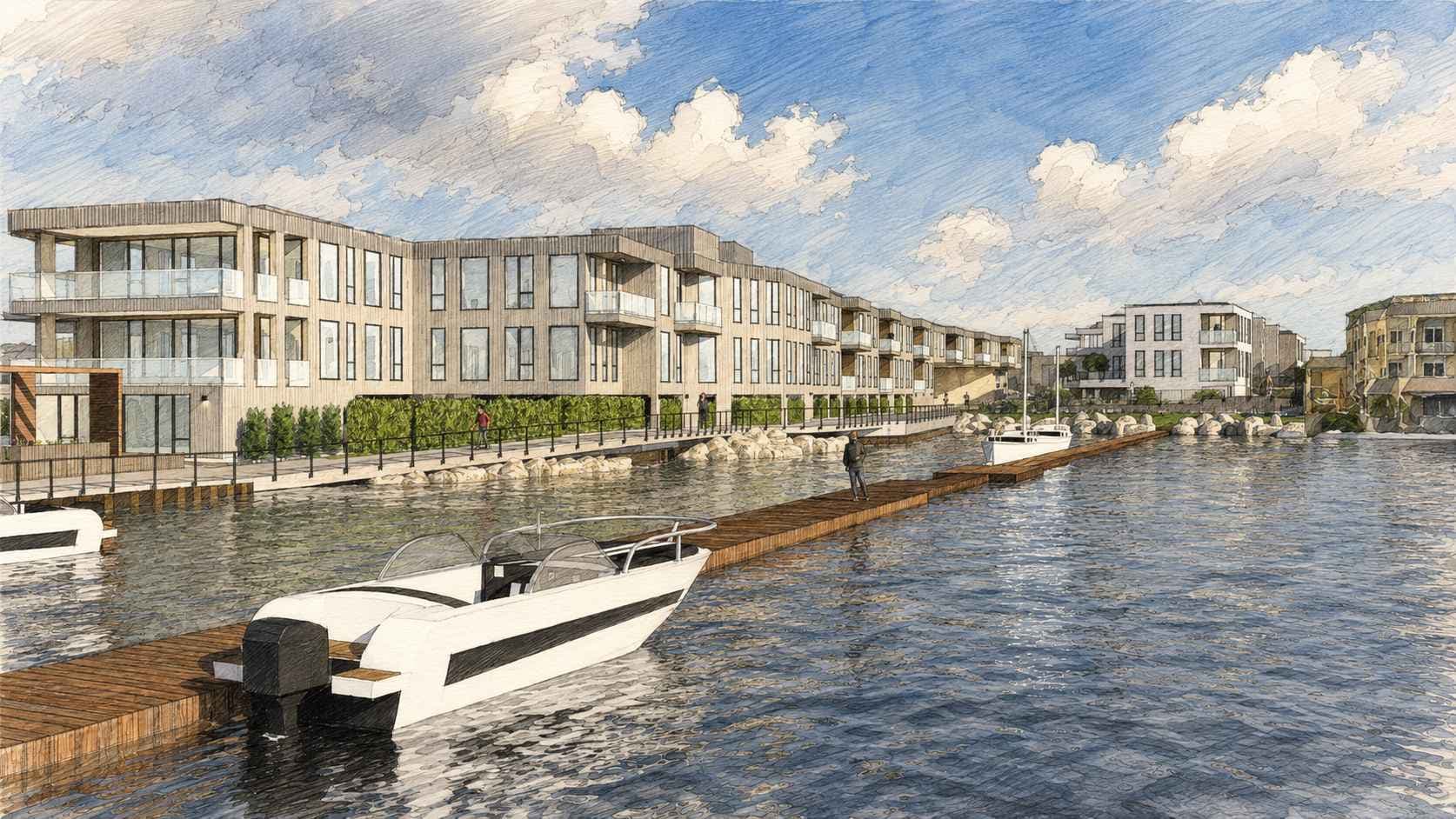
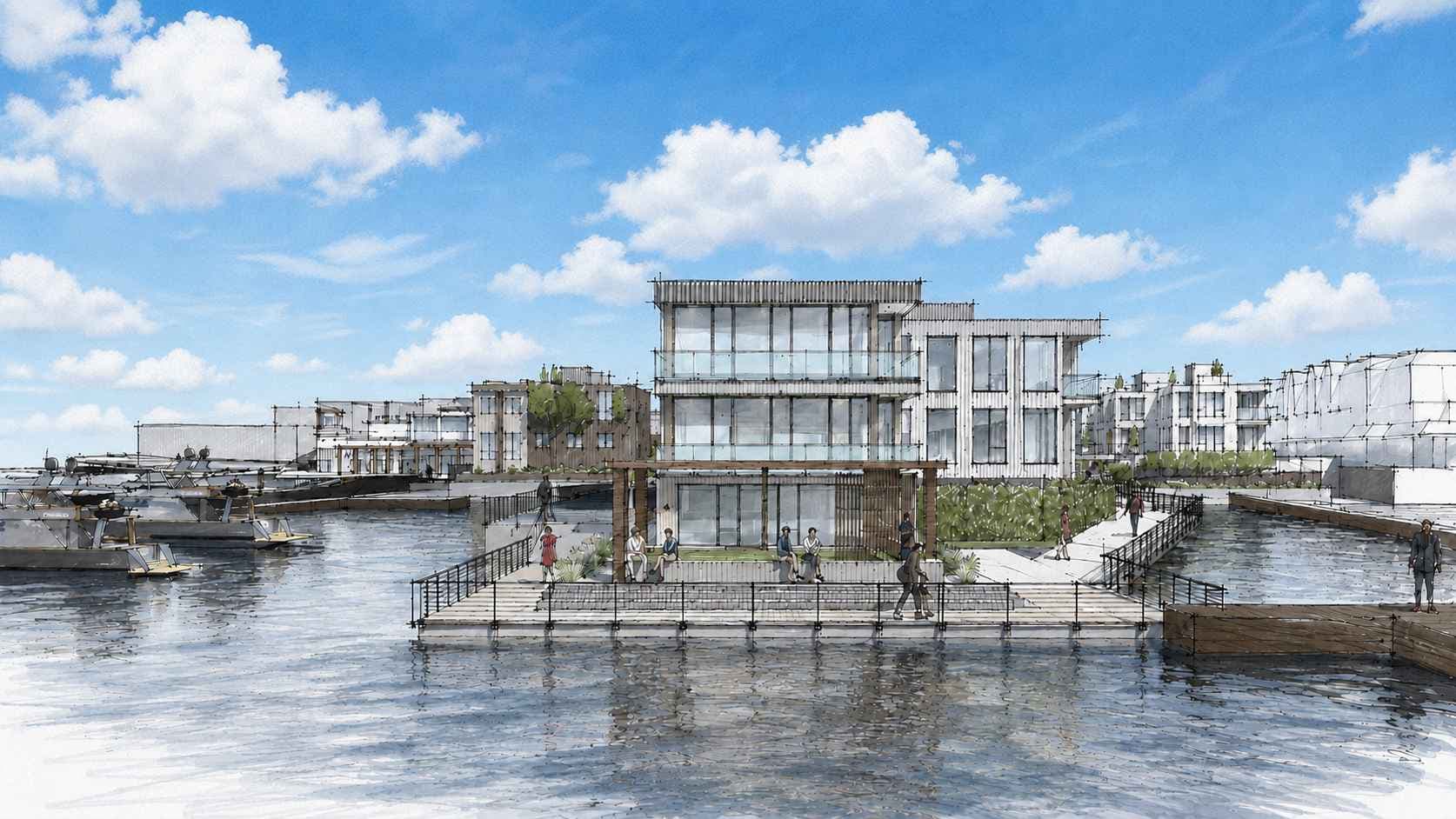
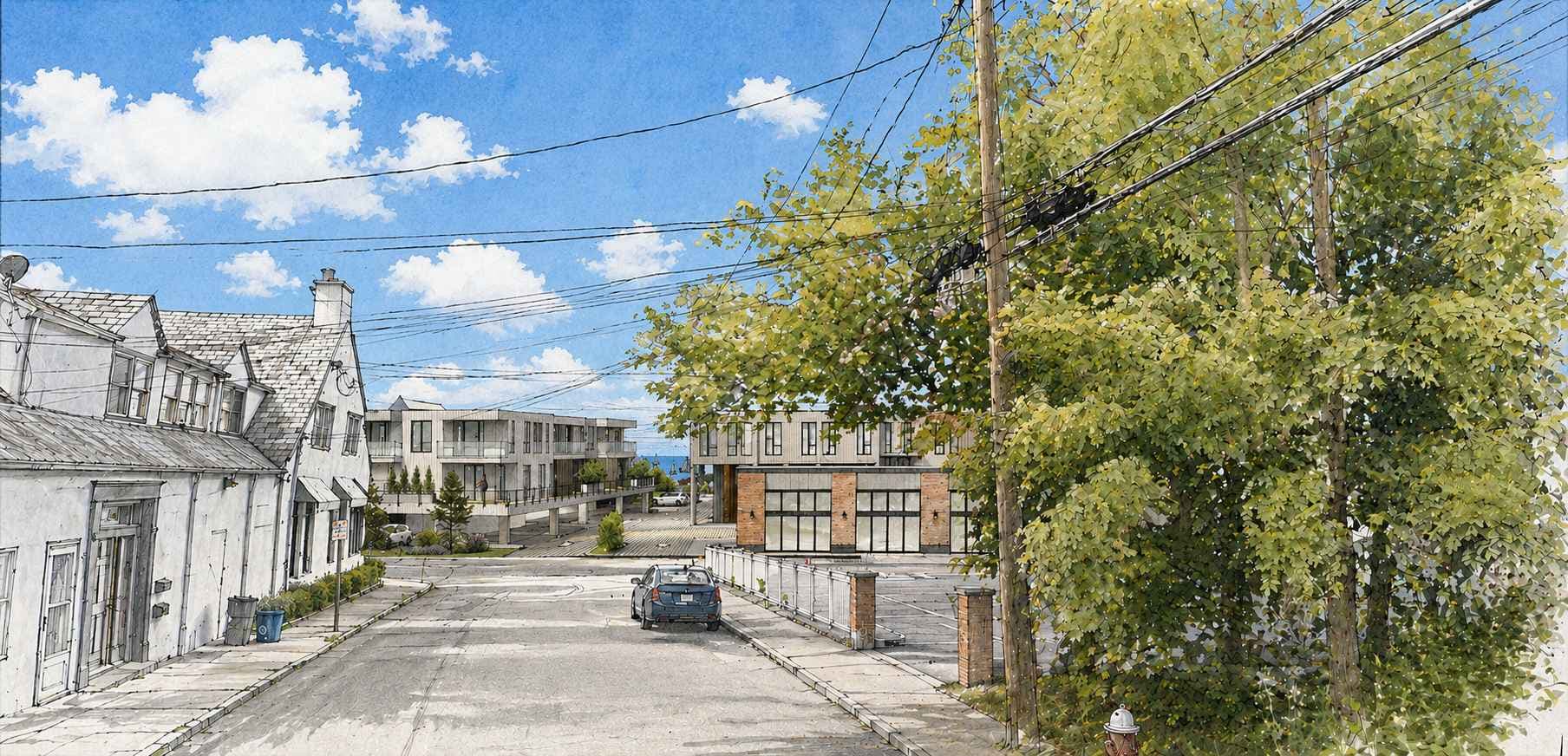
Applicant rendering · Site View from Louie’s Restaurant · Town resubmission · June 1, 2026
Active campaign · Inspiration Wharf
Stop luxury condos on a contaminated brownfield site.
Port Washington deserves a clean shoreline, lawful environmental review, and a waterfront shaped for the public—not a private residential enclave at the water’s edge.
Take action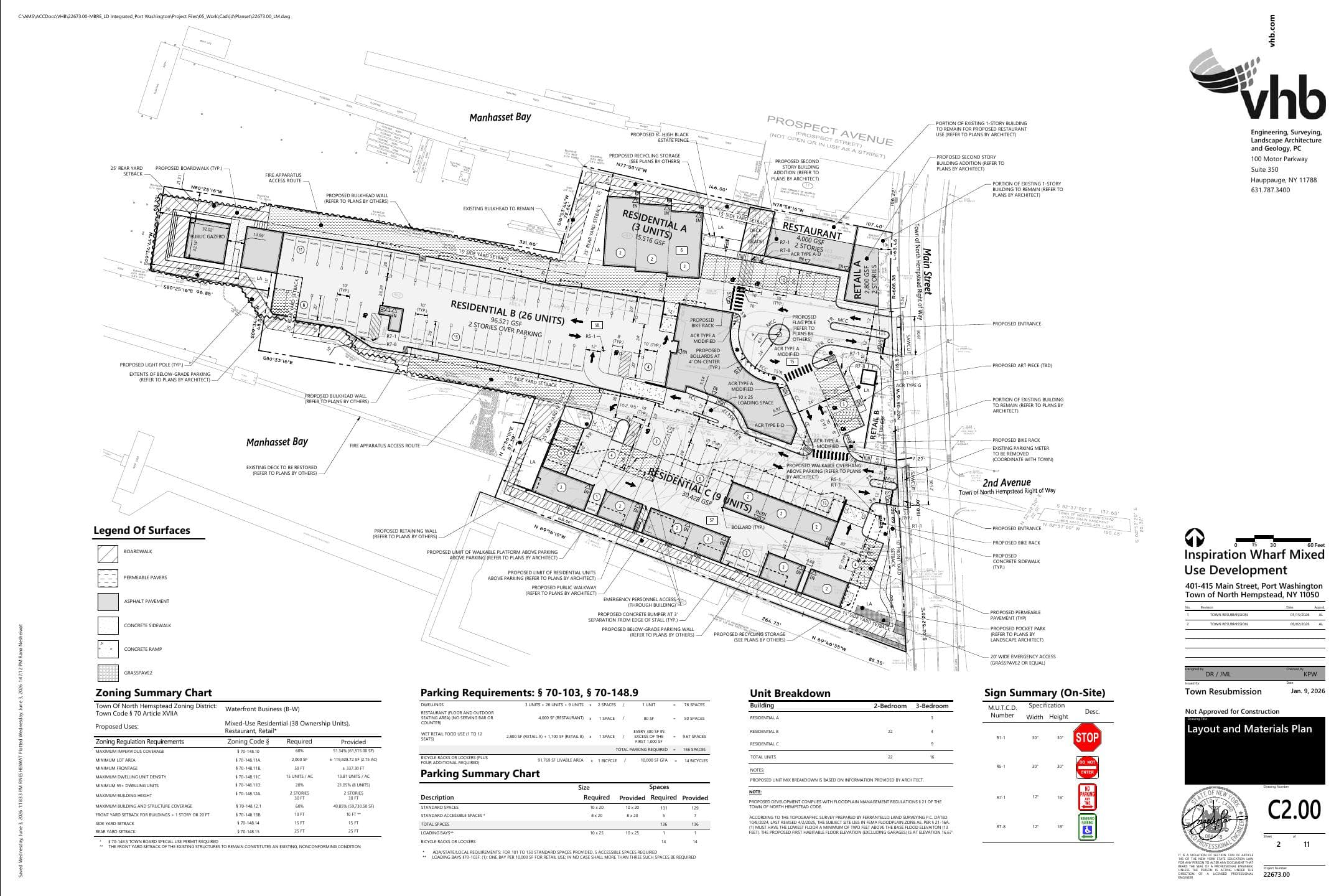
What the site plan shows
The proposal occupies the wharf, nearly to the water on every side.
The applicant’s site plan fills most of the long wharf with residential buildings, roads, parking, and marina uses. The public areas are mainly a walkway around the edge and a gazebo; the plan does not set aside a large public open space.
Open the Town plans and meeting videoWhy we are organizing
Five hours of testimony. Thirty-nine speakers against. Seven ayes.
Inspiration Wharf is the subject of a state Brownfield Cleanup Program application that reports contaminants in soil, groundwater, and soil vapor after more than a century of coal-yard, laundry, marine, and boat-repair uses.
On July 14, 2026, more than 80 residents filled Town Hall. Across five hours of testimony, 39 speakers pressed the Board on environmental review, shallow groundwater, flooding, excavation, public access, and the scale of 38 for-sale condominiums. The Town Board approved the special-use and site-plan applications that same night — unanimously.
On August 13, 2026, neighbors who live near the site filed an Article 78 petition in Nassau County Supreme Court asking the court to review those approvals. SOS PW is helping residents carry that case, following the state cleanup and permits, and asking the Town to consider a public waterfront park instead.
The development remains subject to state cleanup, waterfront, building, and other approvals. The petition is pending; this page does not state that a court has ruled the Town acted unlawfully.
The roll call · July 14, 2026
- Robert Troiano, Jr.District 1 · Carle Place, New Cassel, Old Westbury, WestburyAye
- Edward ScottDistrict 2 · Albertson, Searingtown, North Hills, Roslyn Heights, East Hills, Greenvale, parts of Mineola & Glenwood LandingAye
- Dennis WalshDistrict 3 · Garden City Park, Mineola, Williston Park, New Hyde Park, North New Hyde Park, Floral Park Centre, East WillistonAye
- Christine LiuDistrict 4 · Great Neck Plaza, University Gardens, Russell Gardens, Lake Success, Great Neck Manor, Spinney Hill, North New Hyde Park, parts of HerricksAye
- Yaron LevyDistrict 5 · Kings Point, Great Neck, Great Neck Estates, Great Neck Gardens, Saddle Rock, Saddle Rock Estates, Harbor Hills, Kensington, Thomaston, Manhasset, Plandome, Plandome Manor, Plandome Heights, Munsey ParkAye
- Mariann DalimonteDistrict 6 · Port Washington, Port Washington North, Sands Point, Manorhaven, Baxter Estates, Roslyn, Roslyn Estates, Flower HillAye
- Jennifer DeSenaSupervisor · townwideAye
7–0 · unanimous
- Possible carcinogen · coal-tar PAHBenzo(a)anthracene — soil
- Known carcinogen · coal-tar PAHBenzo(a)pyrene — soil
- Possible carcinogen · coal-tar PAHBenzo(b)fluoranthene — soil
- Probable carcinogen · coal-tar PAHDibenzo(a,h)anthracene — soil
- Possible carcinogen · coal-tar PAHIndeno(1,2,3-cd)pyrene — soil
- Metal · toxic to aquatic lifeCopper — soil
- Probable carcinogen · neurotoxic metalLead — soil
- Neurotoxic metalMercury — soil
- Regulated heavy metalAntimony — groundwater
- Known carcinogen · toxic metalloidArsenic — groundwater
- Regulated heavy metalBarium — groundwater
- Regulated heavy metalChromium — groundwater
- Metal · toxic to aquatic lifeCopper — groundwater
- Probable carcinogen · neurotoxic metalLead — groundwater
- Reported exceedanceMagnesium — groundwater
- Regulated metalManganese — groundwater
- Neurotoxic metalMercury — groundwater
- Known carcinogen as nickel compoundsNickel — groundwater
- Regulated contaminantSelenium — groundwater
- Reported exceedanceSodium — groundwater
- Regulated heavy metalAntimony — dissolved groundwater
- Known carcinogen · metalBeryllium — dissolved groundwater
- Known carcinogen · metalCadmium — dissolved groundwater
- Probable carcinogen · neurotoxic metalLead — dissolved groundwater
- Reported exceedanceMagnesium — dissolved groundwater
- Regulated metalManganese — dissolved groundwater
- Regulated contaminantSelenium — dissolved groundwater
- Reported exceedanceSodium — dissolved groundwater
- Possible carcinogen · coal-tar PAHBenzo(a)anthracene — groundwater
- Possible carcinogen · coal-tar PAHBenzo(b)fluoranthene — groundwater
- Possible carcinogen · coal-tar PAHBenzo(k)fluoranthene — groundwater
- Possible carcinogen · coal-tar PAHChrysene — groundwater
- Possible carcinogen · coal-tar PAHIndeno(1,2,3-cd)pyrene — groundwater
- Gasoline component1,2,4-Trimethylbenzene — soil vapor
- Gasoline component1,3,5-Trimethylbenzene — soil vapor
- Possible carcinogen · mothball chemical1,4-Dichlorobenzene — soil vapor
- Known carcinogen · combustion byproduct1,3-Butadiene — soil vapor
- Industrial solvent2-Butanone — soil vapor
- Gasoline component4-Ethyltoluene — soil vapor
- Petroleum solvent4-Isopropyltoluene — soil vapor
- Possible carcinogen · industrial solvent4-Methyl-2-pentanone — soil vapor
- Industrial solventAcetone — soil vapor
- Known carcinogen · plastics chemicalAcrylonitrile — soil vapor
- Known carcinogen · gasoline componentBenzene — soil vapor
- Neurotoxic industrial chemicalCarbon disulfide — soil vapor
- Possible carcinogen · banned solventCarbon tetrachloride — soil vapor
- Possible carcinogen · chlorinated solventChloroform — soil vapor
- Former refrigerant gasChloromethane — soil vapor
- Petroleum solventCyclohexane — soil vapor
- Ozone-depleting refrigerant · CFC-12Dichlorodifluoromethane — soil vapor
- Industrial alcoholEthanol — soil vapor
- Industrial solventEthyl acetate — soil vapor
- Possible carcinogen · gasoline componentEthylbenzene — soil vapor
- Industrial alcoholIsopropanol — soil vapor
- Gasoline componentn-Heptane — soil vapor
- Neurotoxic gasoline componentn-Hexane — soil vapor
- Gasoline componentIsooctane — soil vapor
- Industrial alcoholIsopropyl alcohol — soil vapor
- Possible carcinogen · petroleum solventIsopropylbenzene — soil vapor
- Industrial solventMethyl ethyl ketone — soil vapor
- Probable carcinogen · paint-stripper solventMethylene chloride — soil vapor
- Possible carcinogen · coal-tar PAHNaphthalene — soil vapor
- Gasoline componento-Xylene — soil vapor
- Gasoline componentp- & m-Xylenes — soil vapor
- Refinery gasPropylene — soil vapor
- Petroleum solventsec-Butylbenzene — soil vapor
- Probable carcinogen · dry-cleaning solventTetrachloroethene — soil vapor
- Possible carcinogen · industrial solventTetrahydrofuran — soil vapor
- Gasoline componentToluene — soil vapor
- Known carcinogen · degreasing solventTrichloroethylene — soil vapor
- Ozone-depleting refrigerant · CFC-11Trichlorofluoromethane — soil vapor
- Site conditionContamination above cleanup objectives on every tax lot
- Site conditionHistoric fill reported six to ten feet deep
- Site conditionGroundwater reported five to nine feet below grade
- Site conditionGroundwater flows toward Manhasset Bay
- Site conditionA partially below-grade parking garage is proposed
- Site conditionThe site sits in a mapped flood zone
- Site conditionExcavation and dewatering require public scrutiny
Here’s how you can help
Choose one way to help.
The case is filed. There is still work to do: carry it through a judge’s decision, follow the cleanup, and show residents what a public park could look like. Pick the action that fits you, and ask one other person to join.
Help fund the case
Help carry the case to a decision.
The case is filed. Residents have asked a court whether the Town followed the law, and the work ahead is the Town’s answer, briefing, and argument before a judge. The GoFundMe pays for attorneys, court costs, and expert review. SOS PW is not yet a 501(c)(3), so contributions are not tax-deductible.
Contribute on GoFundMeStay informed
Know what happens next.
Get concise updates on the court case, cleanup record, permits, public meetings, and opportunities to act.
Join the newsletterSee the environmental concerns
Read what the application reports.
See the contaminants and site conditions that deserve a complete, public explanation before construction advances.
See the environmental recordImagine the alternative
Picture a waterfront park here.
Put another option on the table: more public shoreline, habitat, recreation, fishing access, and open views of Manhasset Bay.
See the park vision
Imagine the alternative
What if the wharf became a waterfront park?
The approval process focused on the developer’s plan. This section puts another option on the table: a continuous waterfront park with open lawns, native shoreline habitat, fishing access, a playground, shade, gathering space, and broad views.
Today the wharf is private property, fenced off, with no public access and no open view from Main Street. Nothing on this page describes a park or a view that exists now.
This rendering is not a finished plan. It makes another choice visible: the Town could work with residents to seek grants and private donations, extend the Bay Walk, and create a waterfront place everyone can use.
Conceptual rendering supplied by SOSPW · subject to public design and feasibility work
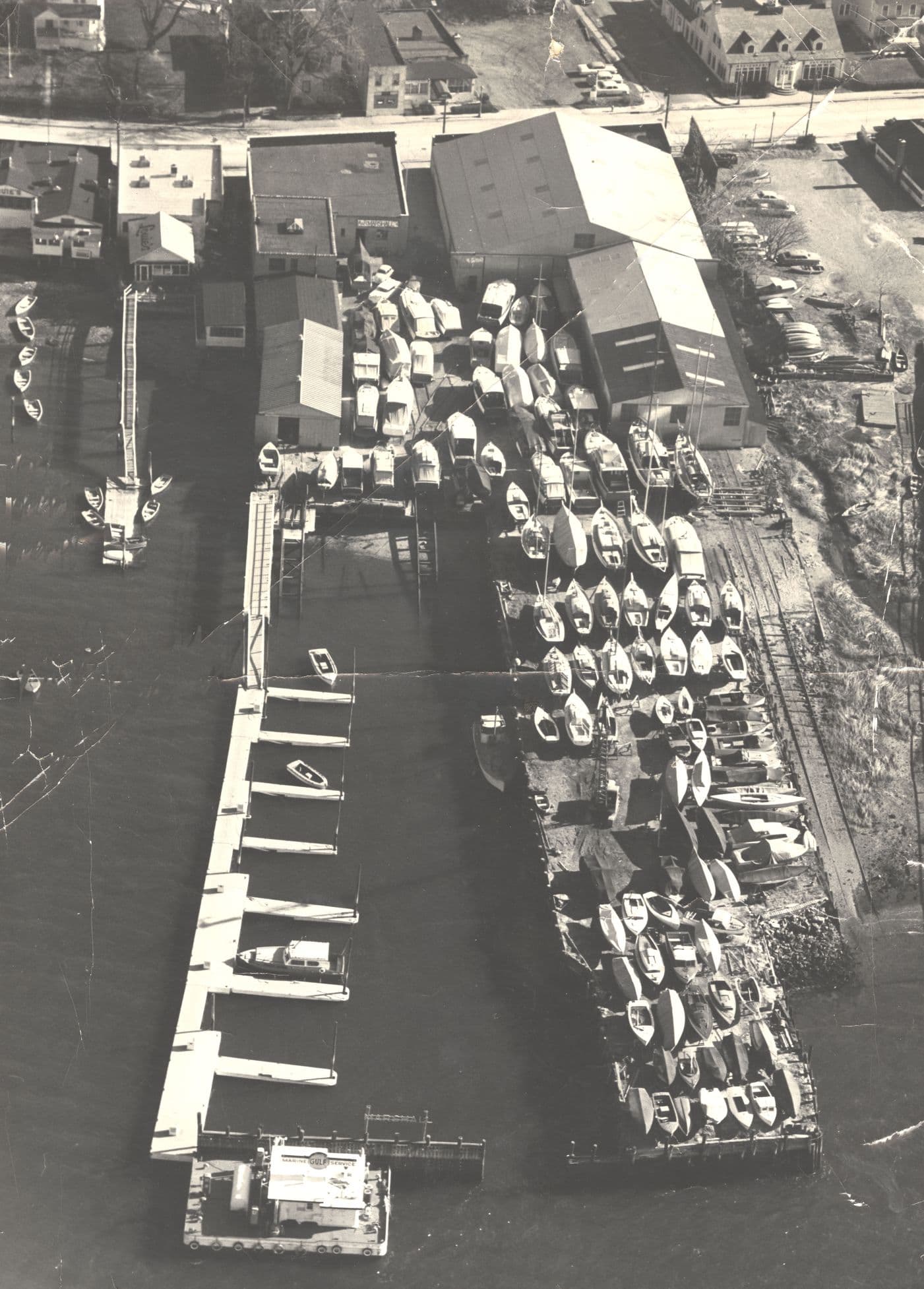
Before Inspiration Wharf
Coal yard. Lumber yard. Boatyard.
Coal was stored on this shore by 1909. A boatyard occupied the wharf for decades afterward. See twelve archival views of the people and businesses that worked here.
View the photo exhibit: A Working WaterfrontThe environmental stakes
Contaminated soil. Shallow groundwater. Excavation at the water’s edge.
Public filings report contamination above state cleanup targets on every lot. They also place groundwater about five to nine feet below ground, flowing toward Manhasset Bay, and report one lead result high enough to affect how excavated soil may have to be handled. These conditions matter because the project calls for digging near the water for a partly underground garage.
Hazardous-waste handling may be required.
One composite soil sample returned 19.9 mg/L TCLP lead—nearly four times the 5 mg/L federal toxicity-characteristic threshold. This is a waste-classification result, not a measure of current human exposure.
Soil lead exceeds the cleanup benchmark.
The application reports a maximum soil-lead concentration of 2,340 mg/kg against New York’s 400 mg/kg restricted-residential soil cleanup objective.
Shallow groundwater complicates excavation.
The application places groundwater within the same shallow subsurface where partially below-grade parking is proposed. Dewatering, treatment, discharge, and waterfront protection require explicit public review.
Read the figures correctly. The multipliers compare reported concentrations with regulatory benchmarks; they do not mean “times more dangerous” and do not prove anyone is currently exposed. Hazard labels describe how authorities classify each substance itself — “known,” “probable,” and “possible” carcinogen follow IARC Groups 1, 2A, and 2B — not a measured exposure at this site. The investigation and remedy remain subject to DEC review, and the source documents control.
Timeline of events
How the wharf got here.
The site’s past uses explain why it is being cleaned up now—and why what happens next matters to the whole community.
- 01
A coal yard on the harbor
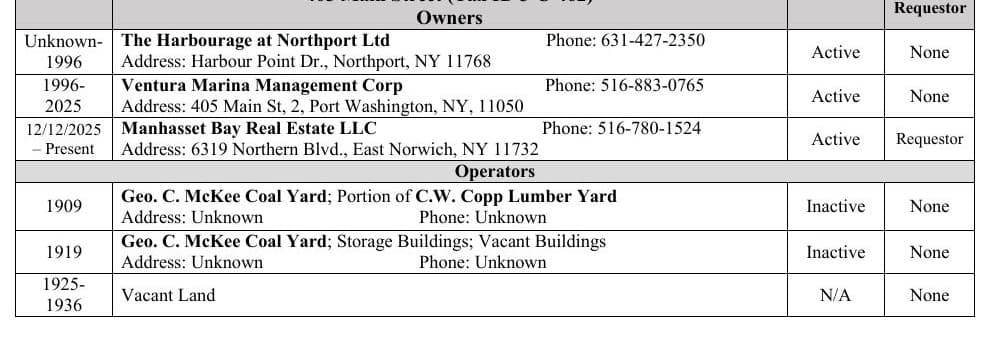
The public BCP application’s operator record identifies Geo. C. McKee Coal Yard at the property in 1909 and 1919. The Brownfield Cleanup Program application identifies Geo. C. McKee Coal Yard on portions of the property. The site’s industrial waterfront history began long before its present name.
- 02
Laundry use follows fill along the shoreline
The application reports that the southern portion was filled to raise the ground above Manhasset Bay and was then used as a laundry.
- 03
Decades of marine service and boat-yard activity
The public application traces boat-yard and marine-service uses from the 1930s forward, including repair shops, a machine shop, boat houses, and historic gasoline tanks.
- 04
The Town changes waterfront zoning
After a packed hearing, the Town Board amended the Waterfront Business District code, including rules for mixed-use developments and below-grade parking.
- 05
The brownfield application becomes public
NYSDEC published notice of the application and draft investigation work plan for the 2.78-acre Main Street Coal & Boat Yard Laundry Site.
- 06
A standing-room-only public hearing
Residents filled Town Hall and raised questions about environmental review, public access, building scale, traffic, water views, and the proposal’s fit with the waterfront code.
- 07
The Town Board approves the project
The Board adopted the special-use and site-plan approvals after the hearing. The proposal includes 38 for-sale condominium units, commercial uses, and waterfront amenities.
- 08
The state cleanup agreement is signed
The developer and NYSDEC executed the Brownfield Cleanup Agreement that governs investigation and cleanup of the site.
- 09
The community participation plan is posted
NYSDEC posted the plan that sets out how the public will be notified and can comment as the investigation and cleanup proceed.
- 10
Residents file the Article 78 petition
Neighbors who live near the site filed a petition in Nassau County Supreme Court asking the court to review the Town’s approvals. The Town and the developer are the respondents.
- 11
The case is pending and the cleanup continues
SOS PW is helping residents carry the case through a judge’s decision, tracking the state cleanup and permits, and showing what a public waterfront park could offer.
Stay involved
Help put a public park on the table.
Join SOS PW for updates on the court case, public meetings, the cleanup, and ways to support a public waterfront park.
Join SOSPWSource and status note: SOSPW separates documented facts, attributed reporting, advocacy positions, and conceptual alternatives. Environmental conditions require professional interpretation. This page is public education and advocacy, not legal or medical advice.
Send a correction or source